AI Content Optimization
Turn visibility gaps into published, measurable content
Close the loop from opportunity to outcome: turn AI visibility gaps into source-grounded articles, use Deep Research mode when a topic needs exceptional depth, publish through connected channels, and track every article's citations and AI visibility — including content created outside GeoVector.
- Broad, source-grounded investigation before writing
- Deep research
- Track articles created inside or outside GeoVector
- Owned + external
- Citation trends, prompts, assistants and milestones
- Per article
See it in action
Key Benefits
Smart Topic Recommendations
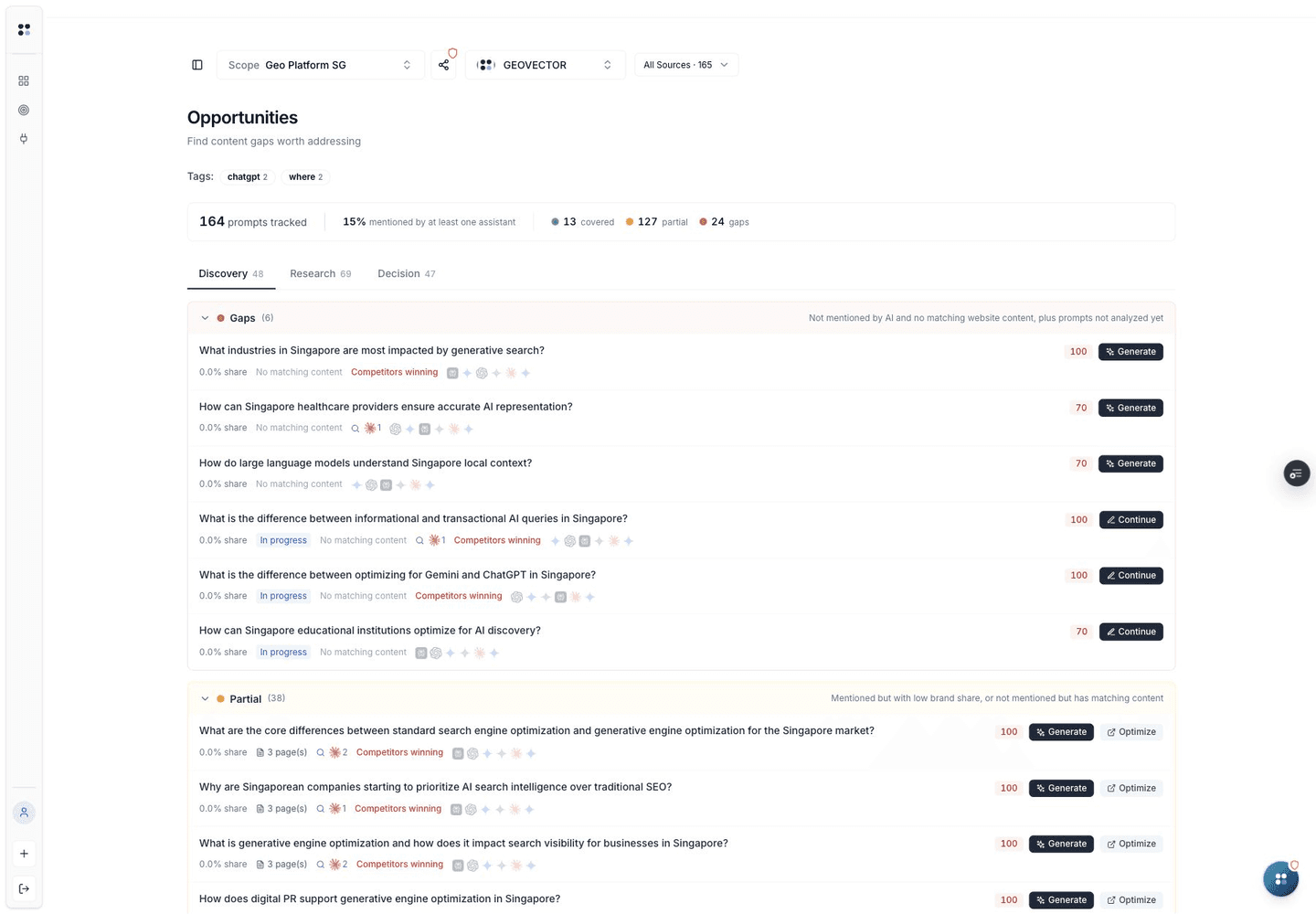
Topics are prioritised by analysing AI responses, competitor visibility signals, and gaps in your current coverage — so you always work on the content with the highest impact potential.
Deep Research Article Writing
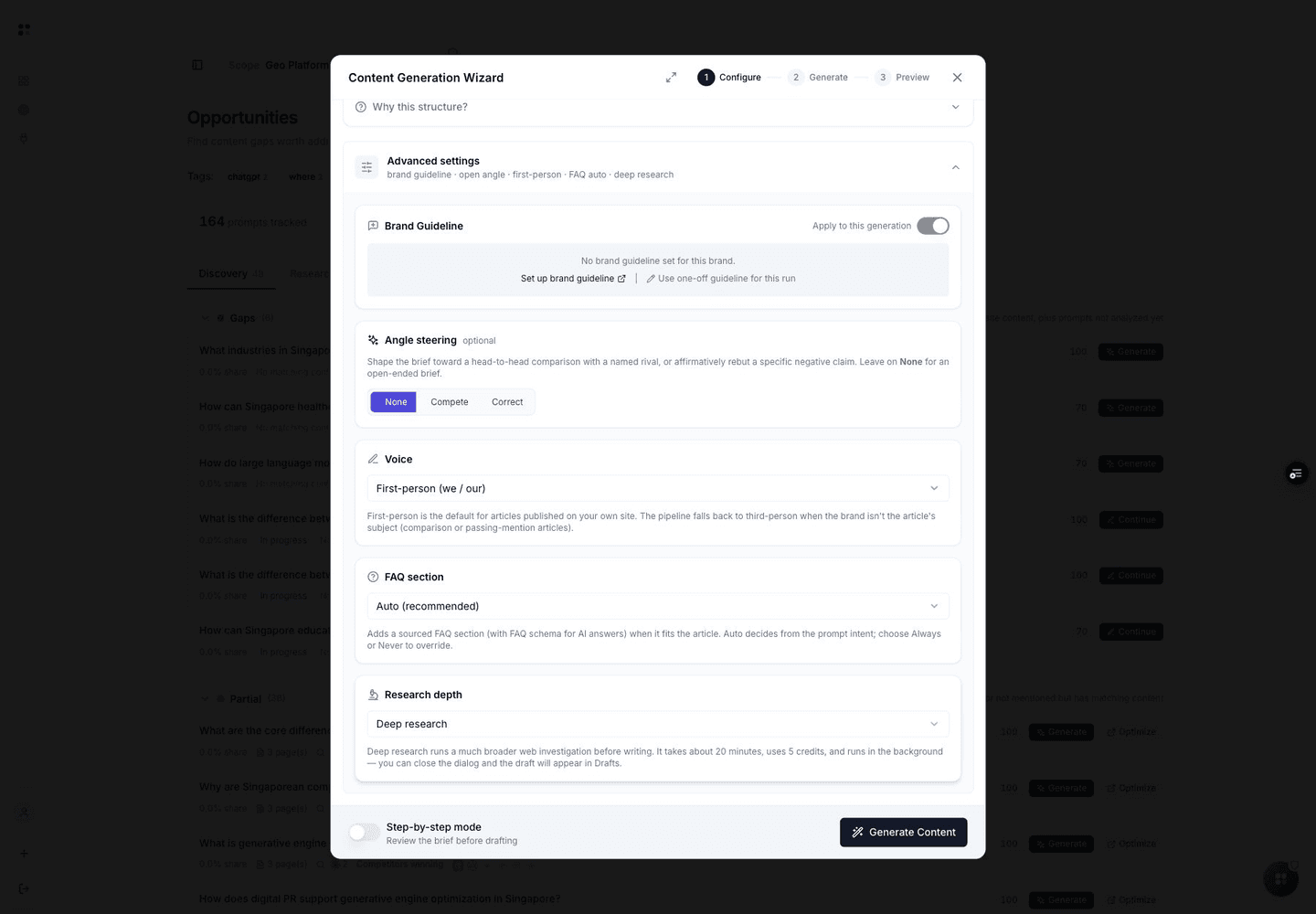
Choose standard research for everyday production or Deep Research for a much broader source investigation before writing substantial, evidence-rich articles.
Article-Level Performance
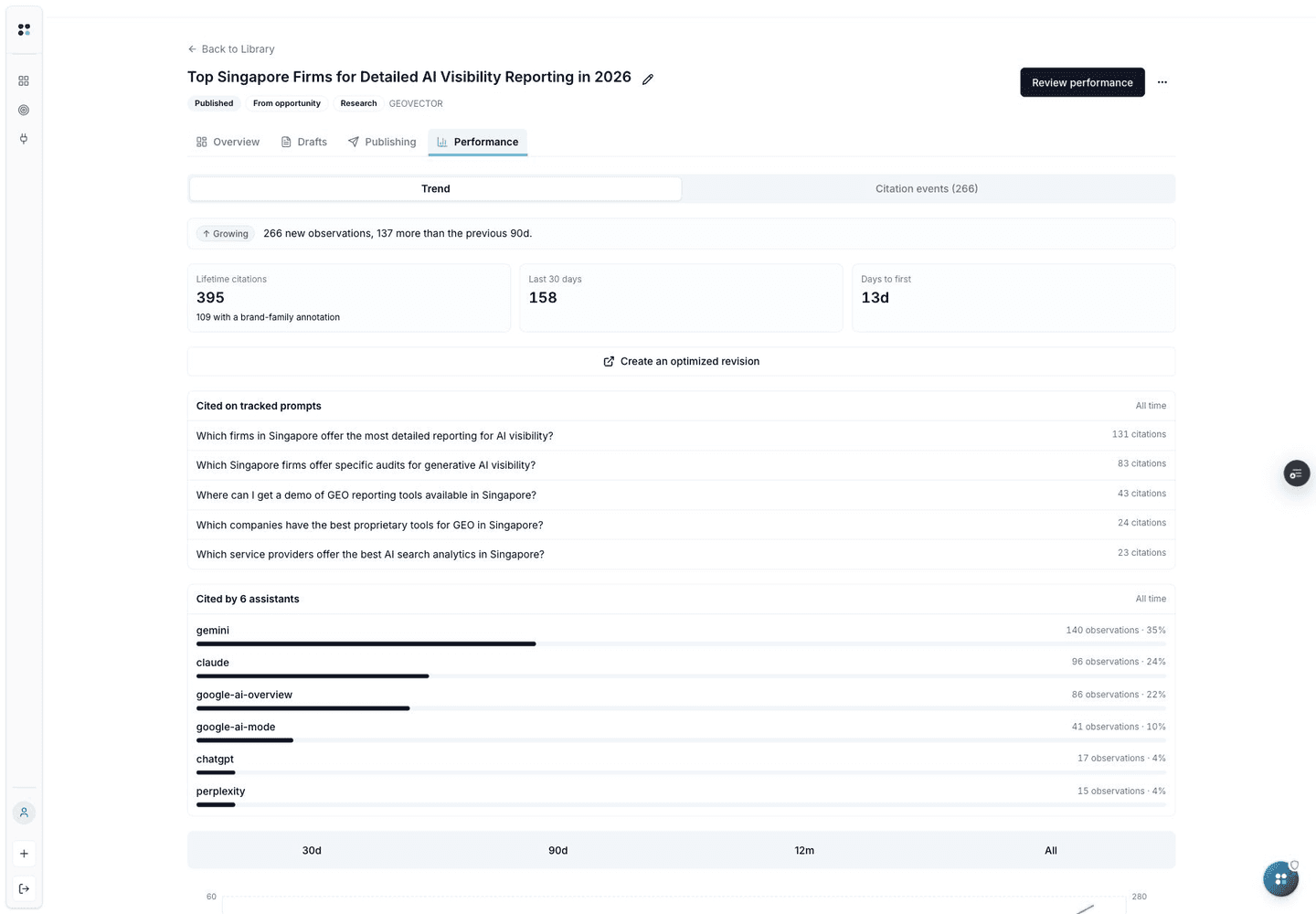
Track published and external articles individually, including lifetime and recent citations, days to first citation, winning prompts, assistant mix, trends, and revision signals.
A closed-loop GEO content system
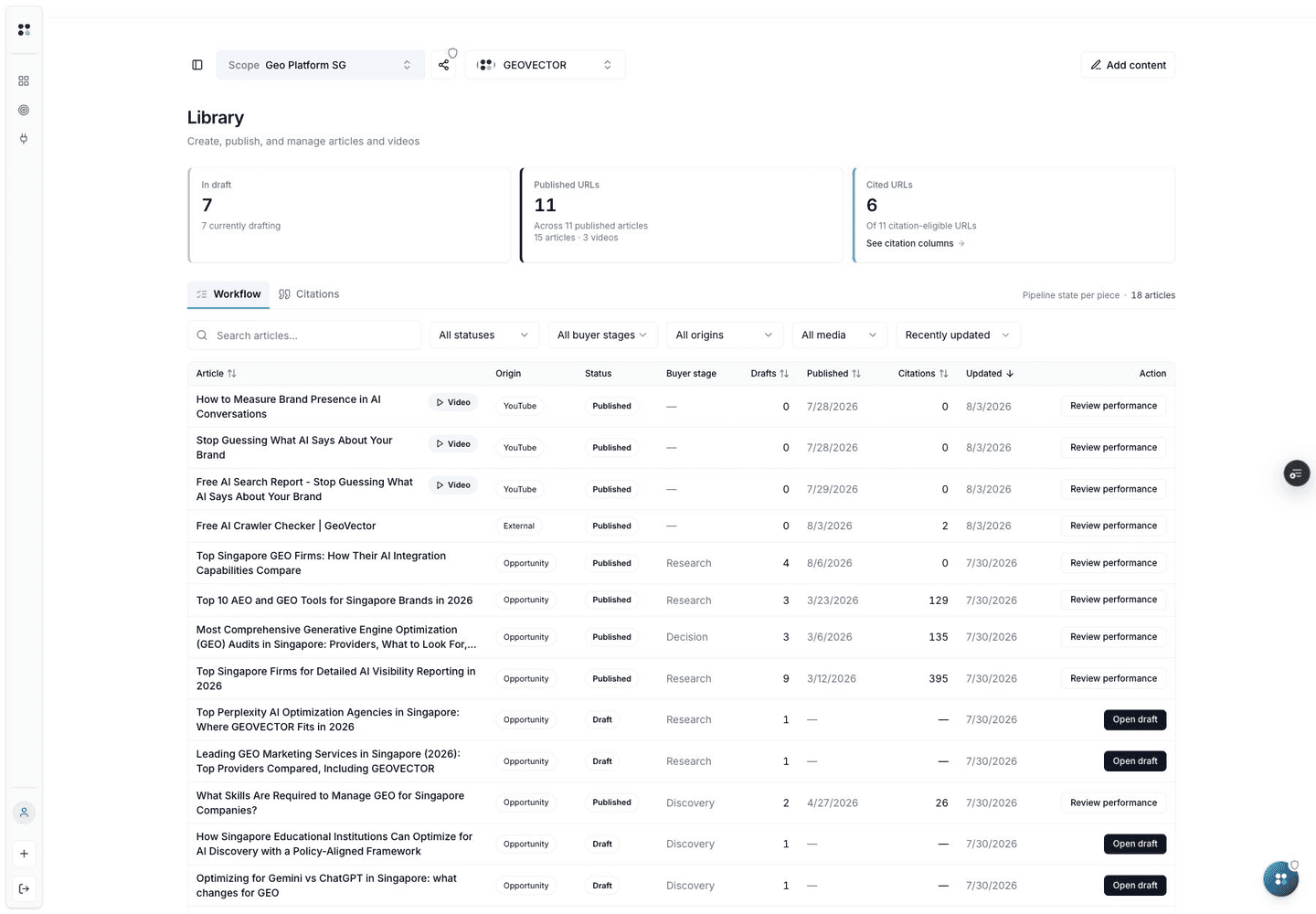
GeoVector starts with observed visibility gaps and recommends topics based on AI responses, competitor coverage, and your existing content. Standard research supports routine production; Deep Research runs a broader, background web investigation before building the brief and draft for topics that need greater depth. Approved work can move into Webflow, LinkedIn, or GeoVector CMS publishing workflows. The Library also accepts external articles, so content created elsewhere enters the same measurement loop. Each article receives its own performance view with citation totals and trends, cited prompts, assistant distribution, time-to-first-citation, milestones, and evidence for deciding when to create an optimized revision.
Who Uses This
Browse AI-prioritised opportunities, then use Deep Research mode for topics that require a wider investigation and a more comprehensive, source-grounded article.
Track articles published through GeoVector alongside external articles, comparing citations, prompt coverage, assistant mix, growth trends, and time to first citation per URL.
Review the full content portfolio from draft through publication and performance, then commission optimized revisions where citation momentum is declining or stalled.