Sentiment Analysis
Know what AI really says about your brand
Monitor the sentiment of every AI mention of your brand — positive, neutral, or negative — across ChatGPT, Gemini, Claude, Perplexity, Google AI Overview, and Google AI Mode. Track sentiment distribution, compare negative rates per assistant, break down sentiment by buyer journey stage, categorize negative themes, and spot trends over time.
See it in action
Key Benefits
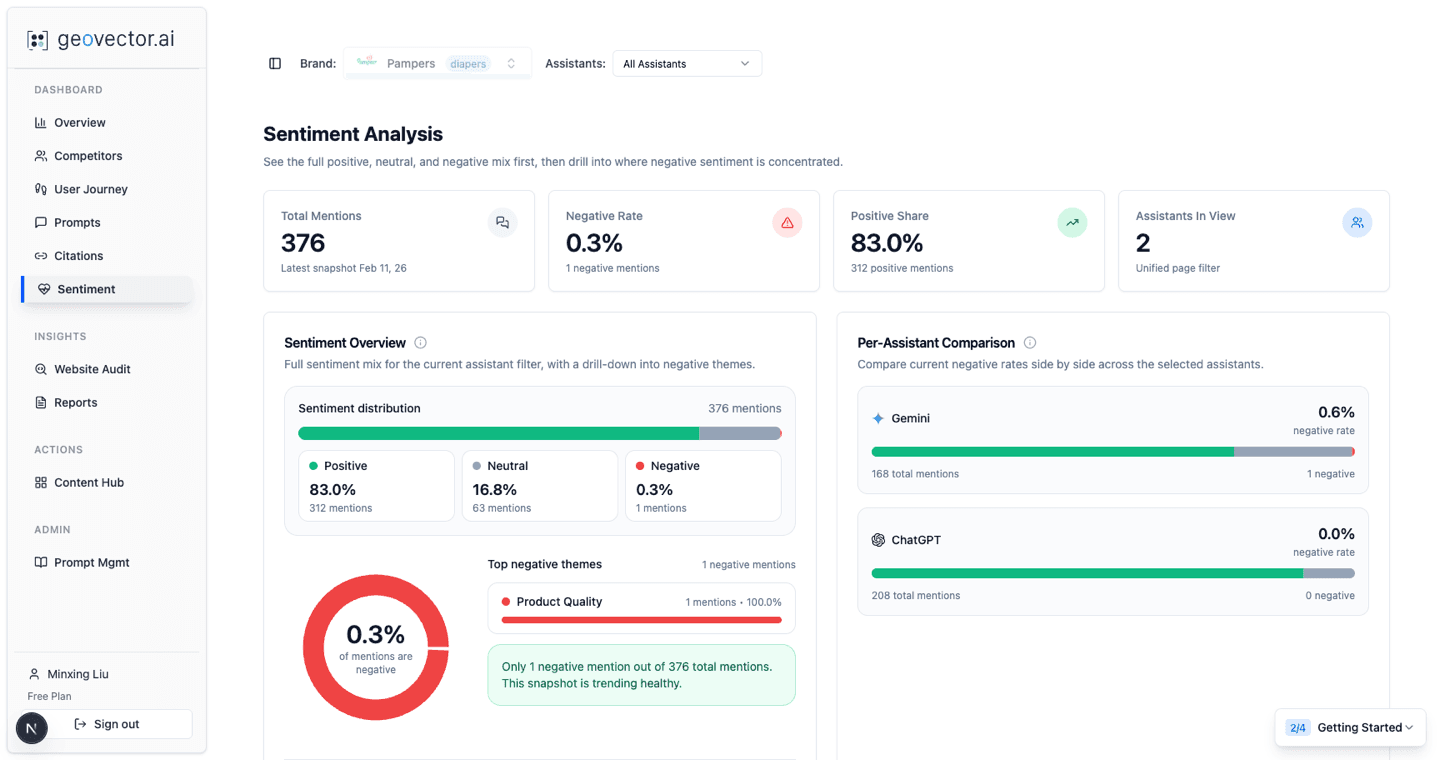
Full Sentiment Distribution
See the positive, neutral, and negative mix across all AI mentions with a stacked bar chart, plus a donut breakdown of negative themes — Product Quality, Pricing, Availability, Customer Service, and Other.
Per-Assistant Comparison
Compare negative sentiment rates side-by-side across ChatGPT, Gemini, Claude, and other AI assistants to spot platform-specific reputation risks.
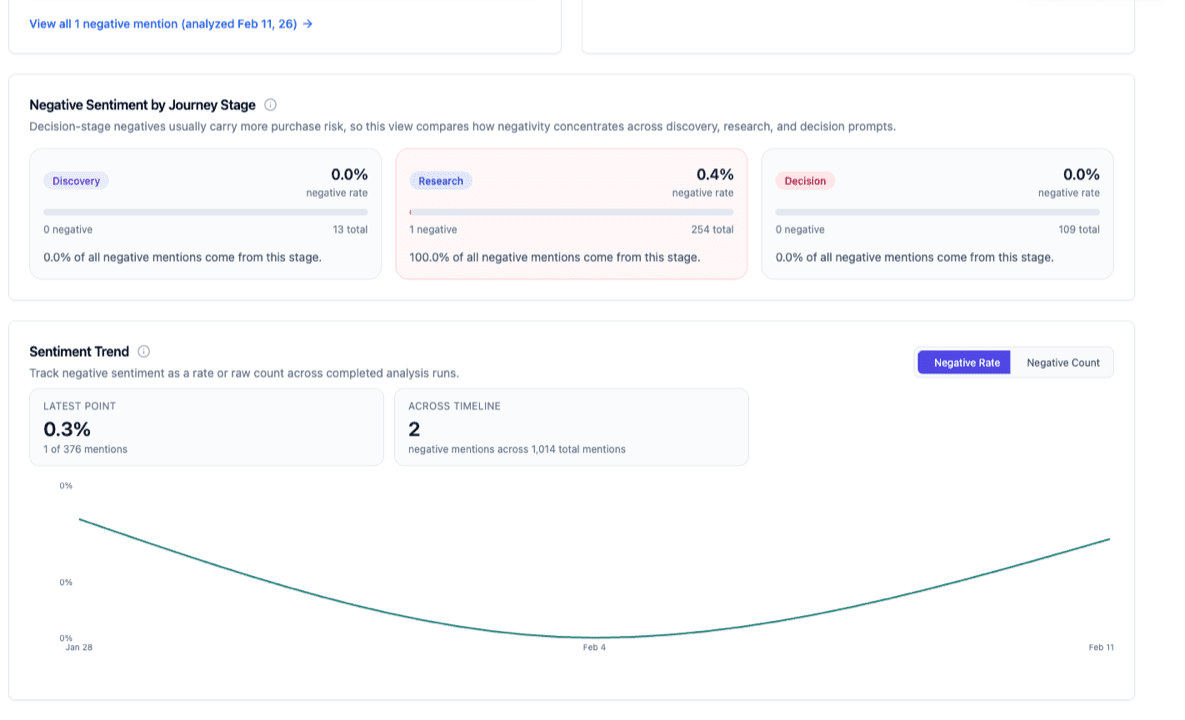
Trend Tracking
Track negative sentiment rate or count over time, with journey stage breakdown across Discovery, Research, and Decision stages to pinpoint where perception shifts.
How sentiment analysis works
Every brand mention captured by GeoVector goes through a two-stage sentiment pipeline. First, an ensemble of transformer models classifies each mention as positive, neutral, or negative based on the context surrounding your brand. Then, every negative classification is verified by a secondary AI model that confirms or overrides the result and assigns a category — Product Quality, Pricing, Availability, Customer Service, or Other. Each mention carries a confidence score, is linked to its buyer journey stage (Discovery, Research, Decision) via the source prompt, and is aggregated across pipeline runs to produce trend data — giving you a complete, reliable picture of how AI perceives your brand.
Who Uses This
Monitor negative sentiment rate across AI assistants, drill into specific negative mentions to understand product quality or pricing concerns before they escalate.
Present sentiment trend data showing how content and PR actions improved brand perception across AI platforms quarter-over-quarter.
Identify which buyer journey stage concentrates the most negative sentiment, then prioritize content to address those concerns and shift AI perception.